

Greek Stuffed Onions
I am so excited to share with you a truly unique and incredibly comforting dish: Greek Stuffed Onions. Get ready to discover how this recipe transforms humble onions into a show-stopping meal that’s bursting with flavor and warmth. If you’re looking for something that feels both exotic and deeply satisfying, you’re going to fall in love with these.
What makes Greek Stuffed Onions so special is the remarkable way the sweet, slow-cooked onions surrender their sharpness, becoming melt-in-your-mouth tender and subtly sweet, perfectly complementing the savory filling. This isn’t just another stuffed vegetable; it’s a celebration of flavor and texture that truly stands out. You’ll love preparing these because they feel gourmet but are surprisingly approachable, and the aroma filling your kitchen will be pure bliss. Plus, it’s a fantastic way to impress your dinner guests or simply treat your family to a hearty, wholesome meal.
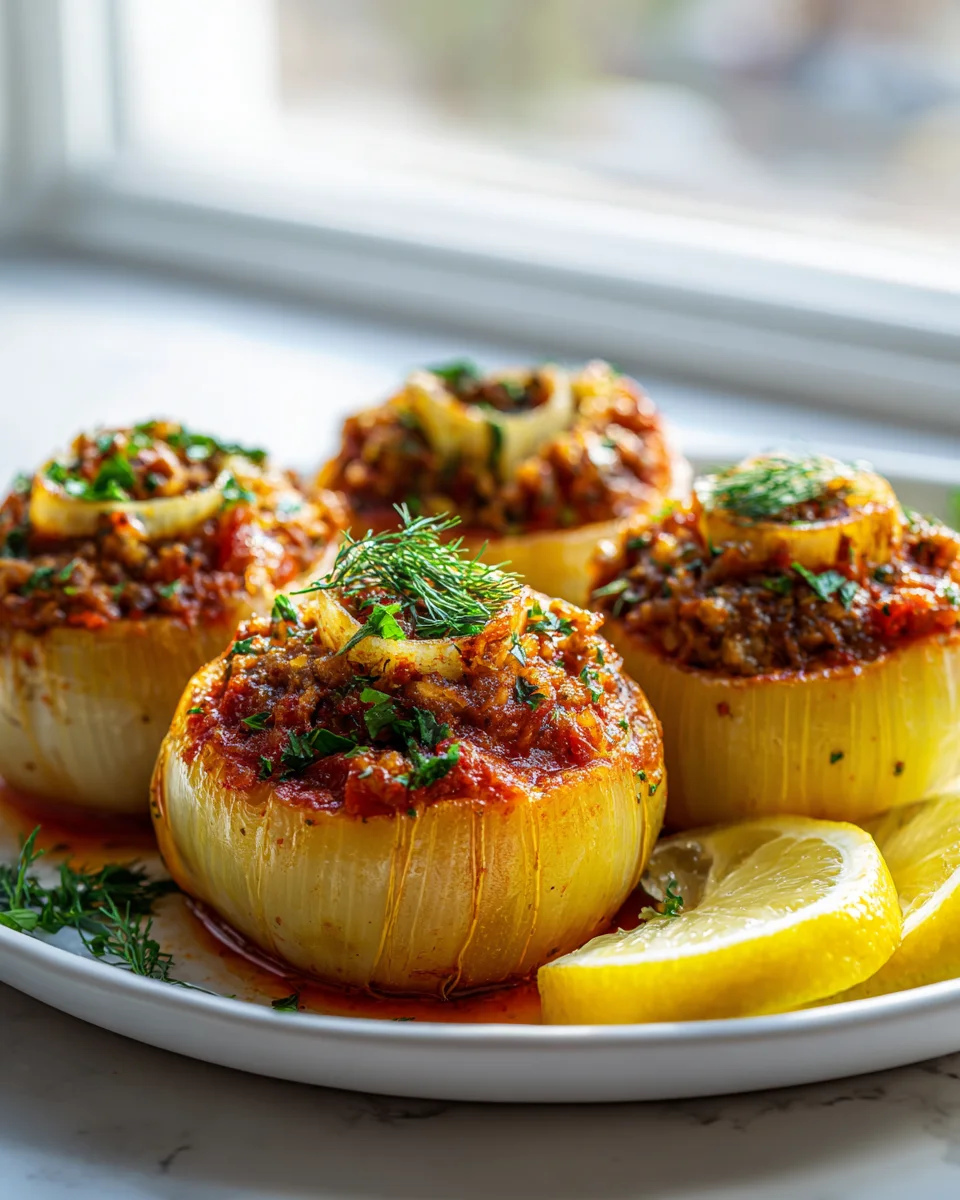
So, what exactly are we making? We’ll be carefully hollowing out large, beautiful onions, then filling them with a delicious mixture of seasoned ground beef, fluffy rice, aromatic herbs, and often a hint of tomato. These savory parcels are then gently simmered until the onions are unbelievably soft and sweet, and the filling is perfectly cooked through. The result is a wonderfully robust and comforting dish that’s perfect for any occasion.

Welcome to my kitchen! Today, I’m so excited to share one of my absolute favorite comfort foods: Greek Stuffed Onions. This dish, known as “Gemista Kremmydia” in Greece, is a heartwarming and incredibly flavorful meal. It takes a little bit of love and patience, but the tender, sweet onions brimming with a fragrant beef and rice stuffing, all bathed in a rich tomato sauce, are truly worth every moment. Let’s dive into how you can create this amazing Greek experience right in your own home.
Ingredient Notes
To make truly memorable Greek Stuffed Onions, choosing the right ingredients is key. Here’s what you’ll need and some thoughts on substitutions:
- Onions: The star of our show! I recommend using large, firm, and relatively uniform onions. Varieties like Vidalia, Spanish, or large yellow onions work wonderfully. Look for ones that are at least softball-sized to give you ample room for stuffing. Sweet onions are particularly delightful here, as their natural sweetness caramelizes beautifully during cooking, complementing the savory filling.
- Minced Beef: For the classic Greek stuffing, lean ground beef is my go-to. It adds a wonderful depth of flavor and richness to the rice mixture. If you’re looking for a vegetarian option, you can easily omit the beef and increase the amount of rice, or add finely chopped mushrooms or lentils for extra texture and protein.
- Rice: I find that medium-grain or short-grain rice (like Arborio or Carolina rice) works best for this recipe. These varieties absorb the cooking liquids and flavors beautifully, resulting in a tender, slightly creamy stuffing. Long-grain rice can work in a pinch, but it tends to be a bit firmer. If you’re looking for a different dietary option, you could experiment with bulgur wheat or even quinoa, though the cooking times and liquid ratios for the stuffing might need slight adjustments.
- Fresh Herbs: This is where the Greek magic really happens! A generous amount of fresh dill, mint, and parsley is essential. These herbs infuse the stuffing and sauce with their vibrant, aromatic flavors. Please, try not to skip the fresh herbs; they make all the difference. If absolutely necessary, you can use dried herbs, but use about a third of the amount of fresh and be aware the flavor won’t be as bright.
- Tomato: We’ll use both crushed tomatoes and a touch of tomato paste. The crushed tomatoes form the base of our luscious sauce, while the paste concentrates the tomato flavor within the stuffing. For an extra fresh touch, especially if tomatoes are in season, you can also grate some fresh tomatoes into the sauce.
- Olive Oil: As with almost any Greek dish, a good quality extra virgin olive oil is non-negotiable. It’s not just a cooking fat here; it’s a flavor component that adds richness and a distinct Mediterranean aroma. Don’t be shy with it!
- Aromatics: Finely chopped garlic and the scooped-out inner parts of the onions provide a fragrant base for our stuffing. Nothing goes to waste in Greek cooking!
- Seasoning: Beyond salt and freshly ground black pepper, a tiny pinch of ground cinnamon or allspice can elevate the dish, adding that characteristic subtle warmth often found in Greek savory dishes. It’s optional, but I highly recommend it for an authentic touch.
- Broth: I typically use vegetable or beef broth as part of the cooking liquid. This adds more depth than just water, ensuring our onions and stuffing are incredibly flavorful.
Step-by-Step Instructions
Making Greek Stuffed Onions is a labor of love, but each step builds towards a truly rewarding meal. Here’s how I prepare them:
- Prepare the Onions: First, gently peel your large onions, trimming just the very ends so they stand flat. Now, this is the trickiest part: using a small, sharp knife or a paring knife, carefully cut around the core of each onion, leaving about a 1/2-inch border from the outer layers. Gently scoop out the inner layers of the onion, being careful not to pierce the outer shell. You want to create a good cavity for the stuffing. Don’t discard these inner pieces; finely chop them and set aside for the stuffing!
- Blanch the Onion Shells: Bring a large pot of salted water to a boil. Carefully place the hollowed-out onion shells into the boiling water and blanch them for about 10-15 minutes, or until they are slightly softened and pliable. This step is crucial; it makes the onions tender enough to eat and prevents them from drying out during the baking process. Drain them well and let them cool slightly.
- Prepare the Stuffing: While the onions are blanching, heat a generous drizzle of olive oil in a large skillet over medium heat. Add the finely chopped inner onion pieces and sauté until softened and translucent, about 5-7 minutes. Add the minced garlic and cook for another minute until fragrant.
- Brown the Beef: Increase the heat slightly and add the lean ground beef to the skillet. Break it up with a spoon and cook until it’s nicely browned. Drain off any excess fat.
- Combine Stuffing Ingredients: Stir in the uncooked rice, a good portion of your fresh dill, mint, and parsley (reserving some for the sauce), tomato paste, salt, pepper, and that optional pinch of cinnamon or allspice. Give everything a good stir to combine all the flavors. I like to add about 1/4 cup of water or broth at this stage to help the rice begin to absorb some liquid. Cook for 2-3 minutes, stirring constantly.
- Stuff the Onions: Once the blanched onion shells are cool enough to handle, carefully fill each one with the prepared beef and rice stuffing. Don’t overpack them too tightly, as the rice will expand during cooking. You might have some stuffing left over, which you can place around the onions in the cooking pot.
- Assemble in the Pot: Choose a large, deep oven-safe pot or Dutch oven where the stuffed onions can fit snugly in a single layer. Arrange the stuffed onions side-by-side. If you have any leftover stuffing, spoon it in between the onions.
- Prepare the Cooking Liquid: In a bowl, combine the crushed tomatoes, the remaining fresh dill, mint, and parsley, a generous splash of olive oil, and enough vegetable or beef broth to come about halfway up the sides of the stuffed onions. Season with a little extra salt and pepper.
- Cook the Onions: Pour the tomato broth mixture over and around the stuffed onions. Cover the pot tightly with a lid or foil. You can cook these either on the stovetop over low heat for 1.5-2 hours, or in a preheated oven at 350°F (175°C) for 1.5-2 hours, or until the onions are incredibly tender and the rice is fully cooked and has absorbed all the liquid. Check halfway through and add a little more broth or water if the liquid level gets too low.
- Rest and Serve: Once cooked, remove the pot from the heat and let it rest, still covered, for about 15-20 minutes. This allows the flavors to meld and the onions to settle.
Tips & Suggestions
- Choose Wisely: Selecting onions of similar size is helpful for even cooking. Look for ones that feel firm and heavy for their size.
- Gentle Scooping: When hollowing out the onions, take your time. You want to create a sturdy, intact shell. Don’t worry if a few outer layers come off; you can still use them!
- Blanching is Key: Don’t skip the blanching step. It makes the onions pliable, easier to stuff, and ensures they cook through to a wonderfully tender consistency without turning mushy.
- Don’t Overstuff: Remember that rice expands quite a bit during cooking. Leave a little room at the top of each onion when filling.
- Flavor Boost: For an extra layer of flavor, you can add a squeeze of fresh lemon juice over the cooked onions just before serving. A dollop of thick Greek yogurt or tzatziki on the side is also a fantastic accompaniment, providing a cool, tangy contrast.
- Make it Vegetarian/Vegan: As I mentioned, you can easily make this dish meat-free by replacing the beef with finely chopped mushrooms, cooked lentils, or simply increasing the amount of rice and herbs in the stuffing. Ensure your broth is vegetable-based for a fully vegan option.
- Serve with Simplicity: These Greek Stuffed Onions are a meal in themselves. A simple side salad, some crusty bread to sop up the delicious sauce, and maybe a sprinkle of feta cheese (if not vegan) are all you need.
Storage
- Cooling: Allow your Greek Stuffed Onions to cool completely at room temperature before storing. This prevents condensation from forming and keeps them fresh longer.
- Refrigeration: Transfer any leftovers to an airtight container. They will keep beautifully in the refrigerator for 3-4 days. The flavors often deepen overnight, making them even more delicious the next day!
- Reheating: To reheat, gently warm the stuffed onions on the stovetop over low heat, or in a preheated oven at 300°F (150°C) until heated through. You might want to add a splash of water or broth to the pot to prevent the sauce from drying out during reheating.
- Freezing: Yes, Greek Stuffed Onions can be frozen! Once cooled, place them in freezer-safe airtight containers or bags. They will maintain their quality for up to 3 months. Thaw them overnight in the refrigerator before reheating as directed above. Be aware that the texture of the onions might become slightly softer after freezing and thawing, but the flavor will still be wonderful.
Final Thoughts
There’s something truly special about taking a humble ingredient and transforming it into a masterpiece, and that’s exactly what you achieve with these Greek Stuffed Onions. I hope you’ve enjoyed the journey of creating this wonderfully aromatic and deeply satisfying dish.
What makes Greek Stuffed Onions a must-try? It’s the incredible balance of flavors: the inherent sweetness of the slow-cooked onions, the savory, rich beef filling, and the aromatic blend of herbs that sing with every bite. Each onion becomes a tender, flavorful package, bursting with warmth and comfort, perfectly complemented by a luscious sauce.
Whether you’re serving them as a hearty main course or an impressive side, these Greek Stuffed Onions are sure to gather compliments and leave a lasting impression. They embody the generosity and deliciousness of Greek home cooking, offering a unique and incredibly satisfying twist on stuffed vegetables that I truly believe you’ll adore. So go ahead, savor every delicious moment – you’ve just crafted a truly memorable meal!

Flavorful Greek Stuffed Onions: A Delicious Mediterranean Dish
- Total Time: 2 hours 30 minutes
- Yield: 4 servings
Description
Discover the comforting and unique flavors of Greek Stuffed Onions, a dish that transforms humble onions into a gourmet meal. Bursting with savory beef, rice, and aromatic herbs, this recipe is perfect for impressing guests or treating your family.
Ingredients
- Large onions (Vidalia, Spanish, or large yellow)
- Lean ground beef
- Medium-grain or short-grain rice (like Arborio or Carolina rice)
- Fresh dill
- Fresh mint
- Fresh parsley
- Crushed tomatoes
- Tomato paste
- Extra virgin olive oil
- Finely chopped garlic
- Salt
- Freshly ground black pepper
- Ground cinnamon or allspice (optional)
- Vegetable or beef broth
Instructions
- First, gently peel your large onions, trimming just the very ends so they stand flat. Using a small, sharp knife, carefully cut around the core of each onion, leaving about a 1/2-inch border from the outer layers. Scoop out the inner layers of the onion, being careful not to pierce the outer shell. Finely chop the inner pieces and set aside for the stuffing.
- Bring a large pot of salted water to a boil. Carefully place the hollowed-out onion shells into the boiling water and blanch them for about 10-15 minutes, or until they are slightly softened and pliable. Drain them well and let them cool slightly.
- While the onions are blanching, heat a generous drizzle of olive oil in a large skillet over medium heat. Add the finely chopped inner onion pieces and sauté until softened and translucent, about 5-7 minutes. Add the minced garlic and cook for another minute until fragrant.
- Increase the heat slightly and add the lean ground beef to the skillet. Break it up with a spoon and cook until it's nicely browned. Drain off any excess fat.
- Stir in the uncooked rice, a good portion of your fresh dill, mint, and parsley (reserving some for the sauce), tomato paste, salt, pepper, and that optional pinch of cinnamon or allspice. Stir to combine all the flavors and add about 1/4 cup of water or broth. Cook for 2-3 minutes, stirring constantly.
- Once the blanched onion shells are cool enough to handle, carefully fill each one with the prepared beef and rice stuffing. Don't overpack them too tightly, as the rice will expand during cooking. Place any leftover stuffing around the onions in the cooking pot.
- Choose a large, deep oven-safe pot or Dutch oven where the stuffed onions can fit snugly in a single layer. Arrange the stuffed onions side-by-side and spoon any leftover stuffing in between them.
- In a bowl, combine the crushed tomatoes, the remaining fresh dill, mint, and parsley, a generous splash of olive oil, and enough vegetable or beef broth to come about halfway up the sides of the stuffed onions. Season with a little extra salt and pepper.
- Pour the tomato broth mixture over and around the stuffed onions. Cover the pot tightly with a lid or foil. Cook on the stovetop over low heat for 1.5-2 hours, or in a preheated oven at 350°F (175°C) for 1.5-2 hours, until the onions are incredibly tender and the rice is fully cooked. Check halfway through and add more broth or water if needed.
- Once cooked, remove the pot from the heat and let it rest, still covered, for about 15-20 minutes.
- Prep Time: 30 mins
- Cook Time: 2 hours
- Category: Dinner
- Method: Baking
- Cuisine: Greek
Nutrition
- Serving Size: 1 stuffed onion
- Calories: 350
- Sugar: 5 g
- Sodium: 600 mg
- Fat: 20 g
- Saturated Fat: 5 g
- Unsaturated Fat: 15 g
- Trans Fat: 0 g
- Carbohydrates: 30 g
- Fiber: 3 g
- Protein: 15 g
- Cholesterol: 50 mg
Keywords: Selecting onions of similar size is helpful for even cooking. When hollowing out the onions, take your time to create a sturdy shell. Don't skip the blanching step for tenderness. Leave a little room at the top of each onion when filling, as rice expands during cooking. For extra flavor, add a squeeze of fresh lemon juice before serving.

Leave a Comment