

Korean Gochujang Chicken
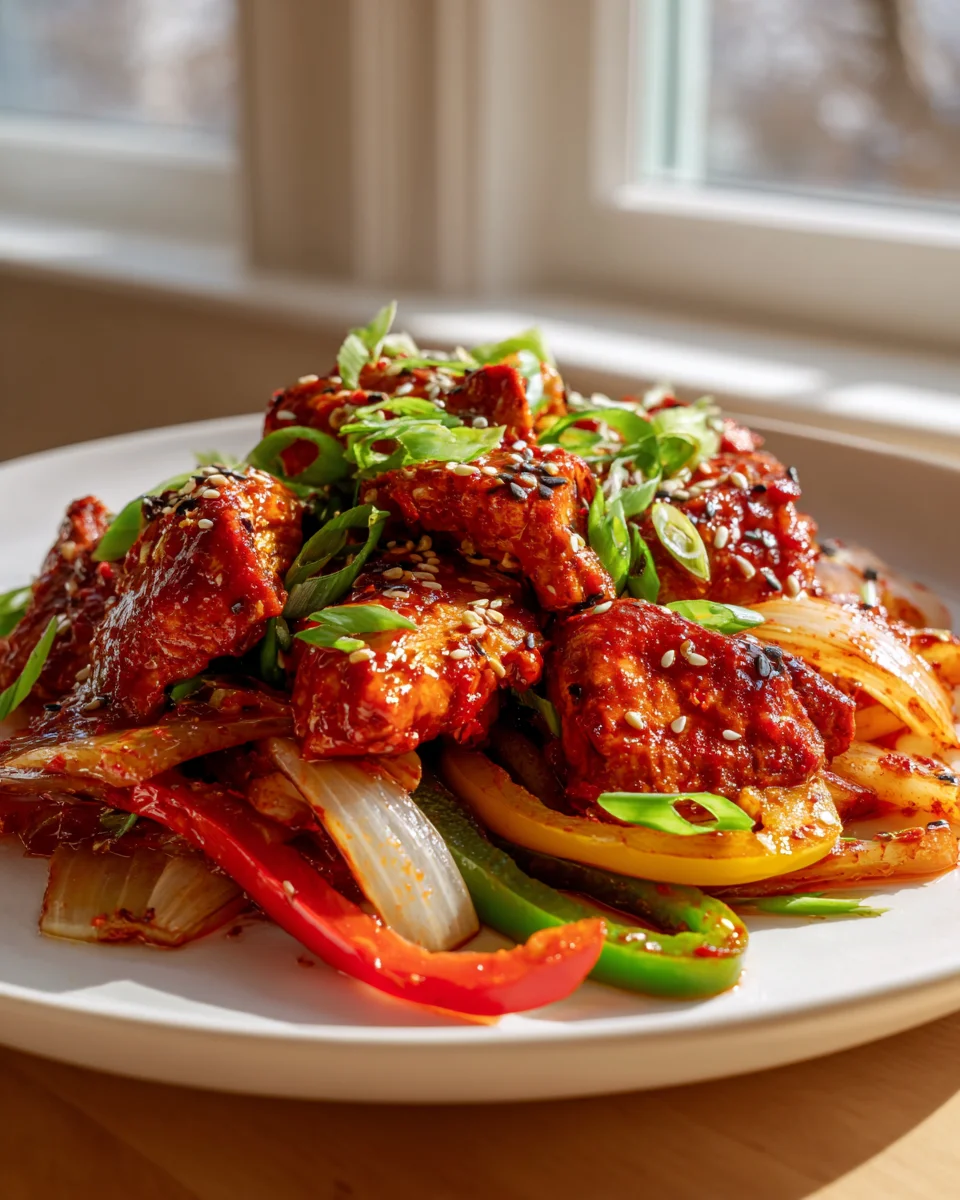
Welcome to my kitchen! Today, I’m excited to share with you a dish that has quickly become a favorite in my home: Korean Gochujang Chicken. This recipe is special because it combines the rich, spicy-sweet flavors of gochujang—Korea’s beloved fermented chili paste—with tender, juicy chicken. It’s the perfect balance of heat and umami, making every bite a delightful explosion of flavor.
What I love most about Korean Gochujang Chicken is its versatility. Whether you’re hosting a dinner party, meal prepping for the week, or just looking for a quick weeknight dinner, this dish fits the bill. The marinade is easy to whip up and can be adjusted to suit your taste. Plus, it comes together in no time, allowing you to enjoy the deliciousness without spending hours in the kitchen.
If you’re ready to bring a little taste of Korea to your table, let’s dive into making this irresistible dish that will have everyone asking for seconds!

Ingredient Notes
When preparing Korean Gochujang Chicken, the ingredients play a crucial role in achieving that authentic flavor profile. Here’s what you’ll need:
- Chicken: I typically use boneless, skinless chicken thighs for their tenderness and juiciness, but you can also use chicken breasts if you prefer a leaner option.
- Gochujang: This Korean red chili paste is the star of the dish, delivering a rich umami flavor with a bit of heat. If you can’t find gochujang, you can substitute with a mix of red chili paste and a touch of miso for a similar depth of flavor.
- Garlic and Ginger: Freshly minced garlic and ginger add an aromatic punch. For convenience, you can use pre-minced versions, but fresh is always best.
- Honey or Brown Sugar: This balances the heat of gochujang. If you want a sugar-free option, you can use a sugar substitute that measures like sugar.
- Sesame Oil: A splash of sesame oil adds a nutty flavor. If you don’t have it, a light olive oil can be used, but the flavor won’t be as pronounced.
- Non-Alcoholic Rice Wine or Apple Cider Vinegar: These add acidity to the marinade. If you don’t want to use vinegar, lemon juice can be a great alternative.
- Green Onions and Sesame Seeds: These are for garnish, adding a fresh crunch and contrast. Feel free to omit if you don’t have them on hand.
Step-by-Step Instructions
Now let’s dive into the cooking process! Follow these steps to create a delicious Korean Gochujang Chicken dish:
- Prepare the Marinade: In a mixing bowl, combine 3 tablespoons of gochujang, 2 tablespoons of honey (or brown sugar), 1 tablespoon of minced garlic, 1 tablespoon of minced ginger, 1 tablespoon of sesame oil, and 1 tablespoon of non-alcoholic rice wine or apple cider vinegar. Whisk everything together until smooth.
- Marinate the Chicken: Cut your chicken into bite-sized pieces and add it to the marinade. Mix well, ensuring each piece is coated. Cover the bowl and let it marinate in the refrigerator for at least 30 minutes, though 2 hours is even better for deeper flavor.
- Cook the Chicken: Heat a tablespoon of oil in a large skillet over medium-high heat. Once hot, add the marinated chicken pieces in a single layer (you may need to do this in batches). Cook for about 5-7 minutes, stirring occasionally, until the chicken is browned and cooked through.
- Glaze the Chicken: Pour any leftover marinade into the skillet and let it bubble for a few minutes until it thickens slightly. This will create a delicious glaze over the chicken.
- Garnish: Once the chicken is cooked and glistening with sauce, remove it from the heat. Serve it hot, garnished with sliced green onions and a sprinkle of sesame seeds.
- Serve: Enjoy your Korean Gochujang Chicken over steamed rice or with a side of stir-fried vegetables for a complete meal.
Tips & Suggestions
Here are some tips to make your Korean Gochujang Chicken even better:
- For extra heat, feel free to add more gochujang or even some red pepper flakes to the marinade.
- Pair this dish with a side of kimchi or pickled vegetables to enhance the meal and give it that authentic Korean touch.
- If you’re looking to add more veggies, consider tossing in some bell peppers or broccoli into the skillet while the chicken cooks.
- To make it a one-pan meal, add cooked rice to the skillet after the chicken is done, along with a splash of water to help steam the rice and absorb the flavors.
- If you have leftovers, this dish is also great in wraps or salads the next day!
Storage
Storing your Korean Gochujang Chicken properly will keep it fresh for future meals:
- Refrigeration: Let the chicken cool completely before storing it in an airtight container. It can be kept in the refrigerator for up to 3 days.
- Freezing: If you’d like to freeze it, place the cooled chicken in a freezer-safe container or bag. It should last for up to 3 months. When ready to eat, thaw in the fridge overnight and reheat in a skillet or microwave.
- Reheating: When reheating, add a splash of water or broth to help moisten the chicken and prevent it from drying out.
Enjoy making and sharing your Korean Gochujang Chicken! It’s a flavorful dish that brings warmth and comfort to the table.
Final Thoughts
If you’re looking for a dish that packs a punch of flavor and leaves your taste buds dancing, then Korean Gochujang Chicken is an absolute must-try! This recipe combines the unique heat of gochujang with savory notes that create a deliciously vibrant experience. The sweet and spicy marinade not only tenderizes the chicken, but it also infuses every bite with a mouthwatering depth that’s hard to resist. Plus, it’s versatile enough to pair with rice, noodles, or fresh vegetables, making it a fantastic option for any meal. I can’t recommend Korean Gochujang Chicken enough – it’s a delightful dish that will surely impress your family and friends, and it’s perfect for those cozy nights in or lively gatherings. Give it a try, and I promise you’ll be coming back for seconds!
Spicy Korean Gochujang Chicken Recipe for Flavor Lovers
- Total Time: 40 minutes
- Yield: 4 servings
Description
Experience the rich, spicy-sweet flavors of Korean Gochujang Chicken, a dish that balances heat and umami perfectly. This quick and versatile recipe is sure to impress at any meal.
Ingredients
- boneless, skinless chicken thighs
- gochujang
- honey or brown sugar
- minced garlic
- minced ginger
- sesame oil
- non-alcoholic rice wine or apple cider vinegar
- green onions
- sesame seeds
- oil for cooking
Instructions
- In a mixing bowl, combine 3 tablespoons of gochujang, 2 tablespoons of honey (or brown sugar), 1 tablespoon of minced garlic, 1 tablespoon of minced ginger, 1 tablespoon of sesame oil, and 1 tablespoon of non-alcoholic rice wine or apple cider vinegar. Whisk everything together until smooth.
- Cut your chicken into bite-sized pieces and add it to the marinade. Mix well, ensuring each piece is coated. Cover the bowl and let it marinate in the refrigerator for at least 30 minutes, though 2 hours is even better for deeper flavor.
- Heat a tablespoon of oil in a large skillet over medium-high heat. Once hot, add the marinated chicken pieces in a single layer (you may need to do this in batches). Cook for about 5-7 minutes, stirring occasionally, until the chicken is browned and cooked through.
- Pour any leftover marinade into the skillet and let it bubble for a few minutes until it thickens slightly. This will create a delicious glaze over the chicken.
- Once the chicken is cooked and glistening with sauce, remove it from the heat. Serve it hot, garnished with sliced green onions and a sprinkle of sesame seeds.
- Enjoy your Korean Gochujang Chicken over steamed rice or with a side of stir-fried vegetables for a complete meal.
- Prep Time: 30 mins
- Cook Time: 10 mins
- Category: Dinner
- Method: Skillet cooking
- Cuisine: Korean
Nutrition
- Serving Size: 1 serving
- Calories: 350
- Sugar: 10 g
- Sodium: 600 mg
- Fat: 15 g
- Saturated Fat: 3 g
- Unsaturated Fat: 10 g
- Trans Fat: 0 g
- Carbohydrates: 30 g
- Fiber: 2 g
- Protein: 25 g
- Cholesterol: 70 mg
Keywords: For extra heat, feel free to add more gochujang or even some red pepper flakes to the marinade. Pair this dish with a side of kimchi or pickled vegetables to enhance the meal and give it that authentic Korean touch.


Leave a Comment