

Korean Bbq Steak Rice Bowls With Spicy Cream Sauce An Incredible Ultimate Recipe is not just a dish; it’s a culinary journey that promises to ignite your taste buds and transport you to a world of vibrant flavors. I am thrilled to share with you a recipe that perfectly encapsulates the beloved spirit of Korean cuisine while adding a tantalizing modern twist. Korean BBQ, or “gogi-gui,” has long been a communal and cherished dining experience, celebrated for its succulent marinated meats and an array of banchan (side dishes).
This recipe takes that rich essence and transforms it into a convenient, yet equally exhilarating, bowl format, perfect for a weeknight dinner or an impressive gathering. People absolutely adore this dish for its incredible balance: the smoky, savory depth of perfectly grilled steak, the comforting foundation of fluffy rice, the fresh crunch of vibrant vegetables, and, critically, the extraordinary kick from our homemade spicy cream sauce. This harmonious blend of textures and temperatures creates an unforgettable meal. It’s the kind of satisfying, flavor-packed dish that leaves a lasting impression, making the Korean Bbq Steak Rice Bowls With Spicy Cream Sauce An Incredible Ultimate Recipe a truly sought-after culinary creation.

Ingredients:
-
For the Korean BBQ Steak:
- 1.5 – 2 pounds Flank Steak or Skirt Steak: I find these cuts work best for absorbing the marinade and cooking quickly.
- 1/4 cup Soy Sauce: Use a low-sodium variety if you’re watching your salt intake.
- 2 tablespoons Brown Sugar: Dark or light, both will work to balance the savory notes.
- 2 tablespoons Toasted Sesame Oil: This adds that quintessential nutty, aromatic Korean flavor.
- 1 tablespoon Mirin (Rice Wine): For a touch of sweetness and depth; if you don’t have it, a splash of dry sherry or white wine will do in a pinch.
- 1 tablespoon Grated Fresh Ginger: Don’t skimp on this! It adds a fantastic pungent warmth.
- 4 cloves Garlic, minced: Freshly minced is always best for maximum flavor.
- 1 tablespoon Gochujang (Korean Chili Paste): This is optional if you want less heat, but I highly recommend it for that authentic spicy kick.
- 1/2 medium Yellow Onion, thinly sliced: The onion marinates with the steak and caramelizes beautifully when cooked.
- 1 tablespoon Sesame Seeds: For garnish and a bit of textural contrast.
- Freshly ground Black Pepper to taste: A few generous cracks will do wonders.
-
For the Spicy Cream Sauce:
- 1/2 cup Mayonnaise: I prefer a good quality, full-fat mayonnaise for the best creaminess.
- 2 tablespoons Gochujang (Korean Chili Paste): This is the star of the show for the sauce’s heat and flavor. Adjust to your spice preference!
- 1 tablespoon Rice Vinegar: For a bright, tangy balance.
- 1 tablespoon Honey or Maple Syrup: To add a touch of sweetness and help round out the spice.
- 1 tablespoon Toasted Sesame Oil: Again, for that lovely nutty aroma.
- 1 small clove Garlic, minced: Just a hint of fresh garlic for pungency.
- 1 tablespoon Water or Milk: To thin the sauce to your desired consistency.
-
For the Rice Bowls and Garnishes:
- 2 cups Short-grain White Rice: Calrose or sushi rice works wonderfully here.
- 4 cups Water (for cooking rice): Or according to your rice cooker’s instructions.
- 1/2 English Cucumber, thinly sliced or julienned: For a refreshing, cool crunch.
- 1-2 Carrots, julienned: Adds color and a sweet, crisp texture.
- 4 Radishes, thinly sliced: For a peppery bite and vibrant color.
- 1 Green Onion (Scallion), thinly sliced: For garnish and fresh oniony flavor.
- Kimchi (optional, but highly recommended): A fermented cabbage side dish that adds incredible tang and spice.
- Extra Sesame Seeds (for garnish): A sprinkle at the end always looks lovely.
Preparing the Korean BBQ Steak Marinade:
- Prepare the Steak: First things first, let’s get our steak ready for its flavor bath. I like to pat the flank or skirt steak very dry with paper towels. This helps the marinade adhere better and also ensures a better sear later. If your steak is very thick, you might want to slice it against the grain into thinner strips, about 1/2 to 3/4 inch thick, before marinating. However, I often marinate it whole and then slice it after cooking for maximum juiciness. Trim off any excessive silver skin or fat, but a little bit of fat can add great flavor.
- Combine Marinade Ingredients: In a medium-sized bowl or a large zip-top bag, I combine all the ingredients for the Korean BBQ steak marinade. That’s the soy sauce, brown sugar, toasted sesame oil, mirin, grated fresh ginger, minced garlic, gochujang (if using), and a generous crack of black pepper. Whisk everything together really well until the brown sugar is fully dissolved and you have a smooth, aromatic sauce. The smell alone at this stage is absolutely incredible, a promise of the deliciousness to come!
- Add Onion and Steak: Next, I add the thinly sliced yellow onion to the marinade. Give it a quick stir to coat. Then, carefully place the flank or skirt steak into the bowl or bag, making sure it’s fully submerged and coated by the marinade. I like to really massage the marinade into the steak for a minute or two to ensure every crevice absorbs all those wonderful flavors.
- Marinate: Once the steak is thoroughly coated, cover the bowl or seal the bag, pressing out as much air as possible. Refrigerate the steak for a minimum of 2 hours, but ideally 4-6 hours for the best flavor penetration. If you have the foresight, an overnight marinade (up to 24 hours) will yield an even more tender and flavorful steak, truly making this an incredible ultimate recipe. The enzymes in the ginger and the acidity in the marinade will work their magic to tenderize the meat.
Crafting the Spicy Cream Sauce:
This sauce is what truly elevates the “Korean Bbq Steak Rice Bowls With Spicy Cream Sauce An Incredible Ultimate Recipe” to another level. It’s creamy, spicy, and perfectly balanced.
- Gather Your Ingredients: I always make sure I have all my sauce ingredients laid out before I start. This makes the process so much smoother and quicker.
- Combine Wet Ingredients: In a small bowl, I combine the mayonnaise, gochujang, rice vinegar, honey (or maple syrup), and toasted sesame oil. I find a small whisk works perfectly here.
- Add Aromatics and Whisk: Next, I add the minced garlic. Now, whisk everything vigorously until the sauce is completely smooth and uniform in color. You want to make sure there are no lumps of mayonnaise or gochujang.
- Adjust Consistency and Taste: If the sauce seems too thick for your liking, I add the water or milk, one tablespoon at a time, whisking after each addition, until I reach my desired consistency. It should be thick enough to cling to a spoon but thin enough to drizzle. This is a crucial step: taste your sauce! You might want to add a little more honey if you prefer it sweeter, or a tiny bit more gochujang if you crave extra heat. Trust your palate here to make it perfect for you. Once mixed, cover the bowl and refrigerate the sauce until you’re ready to serve. This allows the flavors to meld beautifully.
Perfecting the Rice:
Good rice is the foundation of any great bowl dish. For these Korean Bbq Steak Rice Bowls, fluffy, slightly sticky short-grain rice is ideal.
- Rinse the Rice: I always start by thoroughly rinsing my short-grain white rice. Place the rice in a fine-mesh sieve and rinse under cold running water, gently swirling with your hand, until the water runs clear. This removes excess starch, which prevents the rice from becoming gummy. It’s a small step that makes a huge difference in the final texture.
- Cook the Rice (Stovetop Method): For stovetop cooking, transfer the rinsed rice to a medium saucepan with a tight-fitting lid. Add the 4 cups of water. Bring the water to a rolling boil over high heat. As soon as it boils, reduce the heat to the lowest setting, cover the pot tightly, and let it simmer for 18-20 minutes. It’s important not to lift the lid during this time! Resist the urge to peek; the steam is crucial for cooking the rice evenly.
- Rest the Rice: Once the cooking time is up, remove the pot from the heat but keep the lid on. Let the rice rest for another 10 minutes. This allows the remaining steam to finish cooking the grains and makes them perfectly fluffy.
- Fluff and Serve: Finally, remove the lid and gently fluff the rice with a fork. It should be tender, fluffy, and slightly sticky. If you have a rice cooker, simply follow your machine’s instructions for short-grain white rice.
Cooking the Korean BBQ Steak:
Now for the main event! Getting a good sear on the marinated steak is key for an incredible flavor experience in our Korean Bbq Steak Rice Bowls.
- Prepare for Cooking: About 30 minutes before you plan to cook, take the marinated steak out of the refrigerator to bring it closer to room temperature. This promotes more even cooking. Make sure to scrape off any excess marinade and onion bits from the steak. While some caramelization is good, too much wet marinade will steam the steak rather than sear it.
- Preheat Your Pan or Grill: I like to use a heavy-bottomed cast iron skillet or a grill pan for this. Heat your pan over medium-high to high heat until it’s very hot, almost smoking. You can add a tablespoon of high-smoke-point oil (like canola, grapeseed, or avocado oil) to the pan if needed, though the steak will have some oil from the marinade. If grilling, preheat your grill to medium-high heat. A screaming hot surface is essential for a beautiful sear.
-
Cook the Steak: Carefully place the steak (or steak strips) into the hot pan or onto the grill. You should hear a satisfying sizzle immediately. Don’t overcrowd the pan; cook in batches if necessary to maintain high heat.
- For flank or skirt steak (which are relatively thin), cook for about 3-4 minutes per side for medium-rare to medium doneness. I look for a nice, deeply browned crust on each side.
- If you prefer your steak more well-done, add another minute or two per side, but be careful not to overcook, as these cuts can become tough.
- You can also cook the sliced onions from the marinade alongside the steak during the last few minutes of cooking for extra flavor and a lovely caramelized texture.
- Rest the Steak: Once cooked to your desired doneness, immediately transfer the steak to a cutting board. This step is absolutely critical for juicy steak! Tent it loosely with aluminum foil and let it rest for at least 5-10 minutes. This allows the juices to redistribute throughout the meat, ensuring every bite is tender and moist.
- Slice the Steak: After resting, slice the steak thinly against the grain. Cutting against the grain shortens the muscle fibers, making the steak much more tender and enjoyable to eat. Arrange the slices artfully.
Assembling the Korean Bbq Steak Rice Bowls:
Now comes the fun part: bringing everything together to create your ultimate Korean Bbq Steak Rice Bowls With Spicy Cream Sauce!
- Prepare Your Bowls: I like to use wide, shallow bowls to allow for a beautiful presentation of all the components.
- Lay the Rice Foundation: Spoon a generous portion of the hot, fluffy rice into the bottom of each bowl. This is the comforting base of our meal.
- Arrange the Steak: Artfully arrange the thinly sliced, rested Korean BBQ steak over one side of the rice. Make sure to get some of those delicious caramelized onions from the pan too, if you cooked them.
- Add the Fresh Vegetables: Next, arrange your fresh, vibrant vegetables around the steak and rice. I love to place the thinly sliced cucumber, julienned carrots, and sliced radishes in separate small piles. Their crispness and freshness provide a wonderful contrast to the rich steak and creamy sauce.
- Introduce the Kimchi (Optional but Recommended): If you’re using kimchi, place a spoonful or two alongside the other vegetables. Its tangy, spicy, fermented flavor adds an incredible layer of complexity and authenticity to these Korean Bbq Steak Rice Bowls.
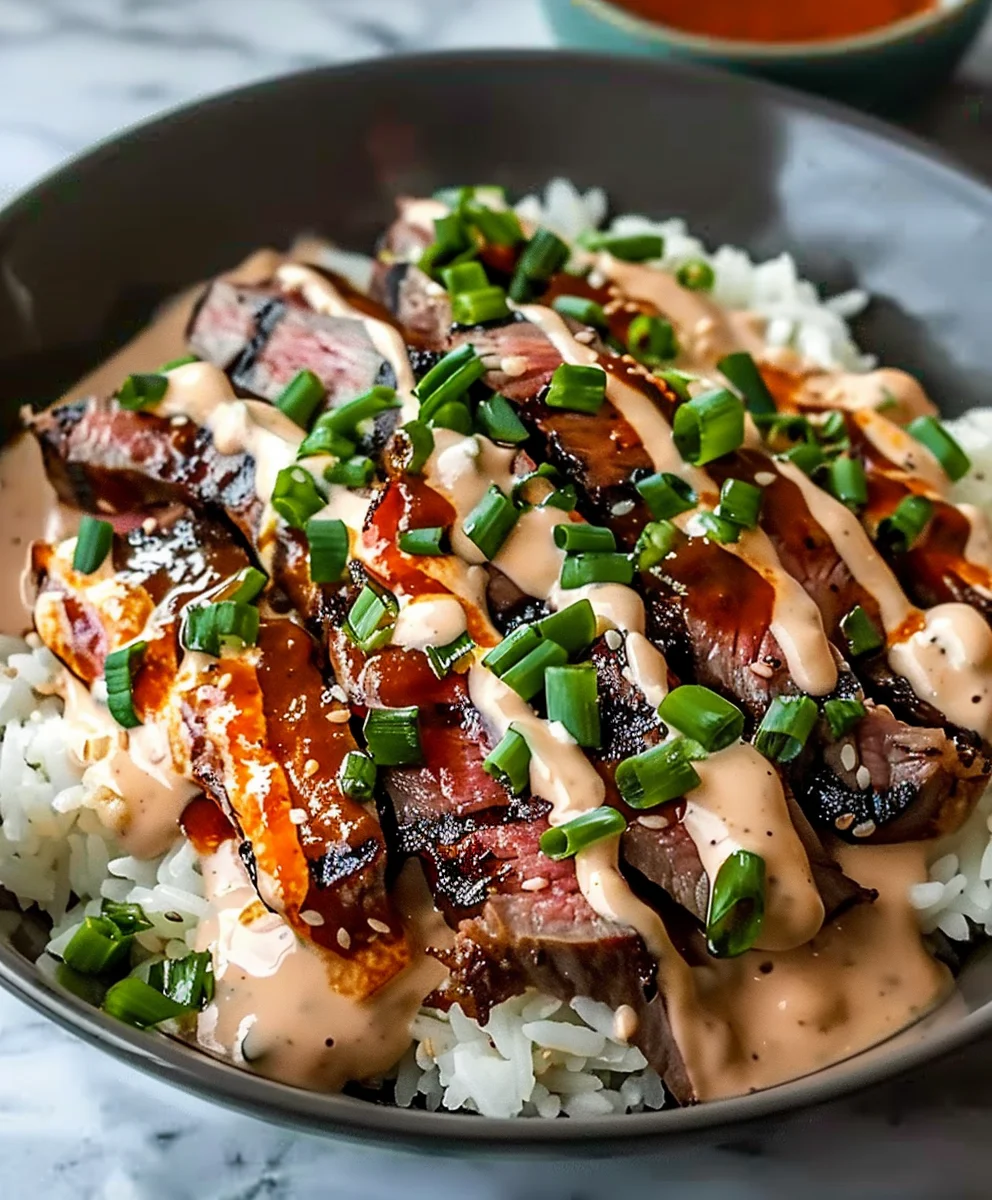
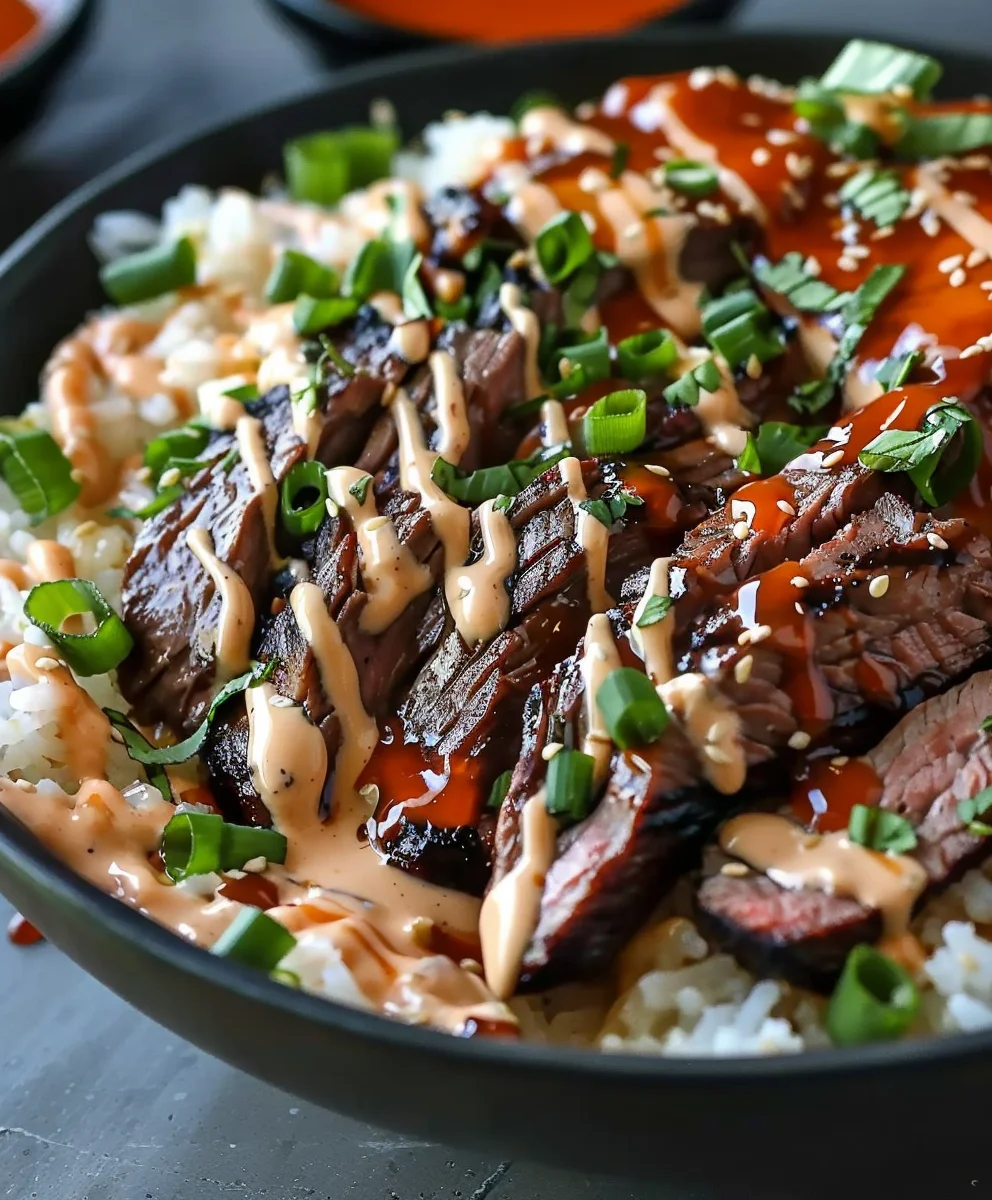
- Drizzle the Spicy Cream Sauce: Now for the magic! Drizzle a generous amount of your homemade spicy cream sauce over the steak and some of the vegetables. You can do a zig-zag pattern or a more controlled pour – whatever feels right! This sauce truly brings the whole bowl together and is a highlight of this incredible ultimate recipe.
- Garnish: Finally, sprinkle with fresh green onions (scallions) and extra sesame seeds for a final flourish of flavor and visual appeal.
- Serve Immediately: These Korean Bbq Steak Rice Bowls With Spicy Cream Sauce are best enjoyed immediately while everything is warm and fresh. Encourage everyone to mix and match bites, ensuring they get a little bit of everything in each spoonful. Get ready for an explosion of flavors and textures!
Conclusion:
Well, my friends, we’ve journeyed through the steps of creating something truly spectacular, and I genuinely hope you’re feeling as excited as I am about it. This isn’t just another meal; it’s an experience, a delightful explosion of textures and flavors that will tantalize your taste buds and leave you utterly satisfied. I truly believe that once you try it, you’ll understand exactly why I call it a must-try. The combination of succulent, marinated steak, perfectly cooked rice, crisp fresh vegetables, and that utterly addictive spicy cream sauce creates a symphony of taste that is hard to forget. It’s comforting yet exhilarating, familiar yet uniquely exciting. This dish perfectly encapsulates the vibrant spirit of Korean-inspired cuisine, bringing a gourmet feel right into your home kitchen with surprisingly little fuss. It’s the kind of meal that promises a memorable dinner, whether you’re enjoying a quiet evening at home or hosting a lively gathering with loved ones.
What makes this recipe stand out, beyond its incredible flavor profile, is its remarkable balance. You have the savory richness of the steak, the slight sweetness and umami from the marinade, the fiery kick and creamy texture of the sauce, and the refreshing crunch of the fresh toppings. Every single element plays a crucial role, contributing to a harmonious whole that is greater than the sum of its parts. This balance is what elevates it from merely a good meal to something truly exceptional. It’s the kind of dish that makes you close your eyes and savor each bite, a moment of pure culinary bliss that transports you to a vibrant street food stall or a cozy, authentic Korean restaurant. This is why I’m so confident in presenting you with the Korean Bbq Steak Rice Bowls With Spicy Cream Sauce An Incredible Ultimate Recipe. It truly lives up to its name, promising an unparalleled dining adventure from the first aroma to the last delicious spoonful.
Now, let’s talk about making this dish truly your own or enhancing the experience. While the recipe itself is perfect as is, there are always ways to elevate your dining pleasure and infuse a bit of your personal touch. When serving, consider adding a generous sprinkle of toasted sesame seeds or some extra chopped scallions for both visual appeal and an added layer of nutty texture. For a more authentic Korean touch, a side of store-bought or homemade kimchi is absolutely fantastic, adding a fermented tang and delightful spice that beautifully cuts through the richness of the steak and sauce. Quick-pickled daikon radish or cucumber slices would also be a brilliant, refreshing accompaniment, providing a crisp, cooling contrast to the warmth and spice of the bowls. Don’t underestimate the power of these small additions to transform your meal into a full culinary journey.
To complete your meal, think about what you’ll be sipping alongside these incredible bowls. A cold bottle of Korean soju or a light, crisp lager would be a perfect companion, balancing the spice and richness with its refreshing qualities. For a non-alcoholic option, iced green tea, a perfectly brewed barley tea, or a refreshing sparkling water with a squeeze of lime can be incredibly invigorating and cleansing to the palate. Don’t be afraid to arrange your bowls with an artistic eye – pile the steak high, artfully drizzle that irresistible spicy cream sauce, and scatter the vibrant toppings to create a feast for the eyes before it even reaches your palate. Remember, presentation is part of the dining experience, and these bowls are inherently beautiful!
And the beauty of this recipe extends to its versatility!
If you’re looking for variations, the possibilities are endless, allowing you to tailor it to your preferences or what you have on hand. While steak is phenomenal, you could easily substitute it with thinly sliced chicken or pork tenderloin, adjusting cooking times accordingly for tender, juicy results. For a fantastic vegetarian twist, consider marinated grilled portobello mushrooms, crispy pan-fried tofu, or even some roasted sweet potatoes as your main protein. Don’t like too much spice? Adjust the amount of gochujang or sriracha in the cream sauce, or add a dollop of plain Greek yogurt or sour cream to cool it down to your preferred level. For those who crave more heat, a dash of red pepper flakes, a drizzle of chili oil, or some finely chopped bird’s eye chilies can take it to the next, exhilarating level. You could even add a perfectly fried egg on top with a runny yolk for an extra layer of richness and an appealing texture, or some creamy avocado slices for healthy fats and a cooling, smooth contrast. Feel free to experiment with different greens, like baby spinach or shredded cabbage, or other pickled vegetables – your kitchen, your rules!
So, my dear food enthusiasts, I implore you: don’t just read about this culinary masterpiece – make it! Clear your schedule, gather your ingredients, and embark on this delicious adventure. You deserve to treat yourself and your loved ones to a meal that is both comforting and exhilarating, simple enough for a weeknight but special enough for a celebration. The incredible aroma alone will have your household buzzing with anticipation as it fills your home, and the first bite? Pure bliss, I promise you. It’s an opportunity to create restaurant-quality food right in your own kitchen, impressing everyone at your table (including yourself!). This recipe is not just about following instructions; it’s about enjoying the process and savoring the fantastic outcome.
Once you’ve whipped up these magnificent bowls, please don’t keep the experience to yourself! I would absolutely love to hear about your culinary journey. Did you love the spicy cream sauce as much as I do? What delightful variations did you try? Did you impress your family and friends with your newfound Korean BBQ skills? Please share your photos and stories with me. Your feedback and creations truly inspire me and are the highlight of sharing these recipes with our amazing community. Cooking is an act of love, and sharing that love through incredible food and conversation is one of life’s greatest joys. I can’t wait to see your versions of this incredible dish!
Happy cooking, and enjoy every single mouth-watering bite!
Korean BBQ Steak Rice Bowls with Spicy Cream Sauce
A culinary journey combining the smoky, savory depth of perfectly grilled Korean BBQ flank or skirt steak with fluffy rice, fresh vegetables, and an extraordinary homemade spicy cream sauce. This ultimate recipe offers a harmonious blend of textures and temperatures, perfect for a weeknight dinner or impressive gathering.
Ingredients
-
1.5 – 2 pounds Flank Steak or Skirt Steak
-
1/4 cup Soy Sauce (low-sodium)
-
2 tablespoons Brown Sugar
-
2 tablespoons Toasted Sesame Oil
-
1 tablespoon Mirin (non-alcoholic alternative, e.g., mix of rice vinegar and sugar)
-
1 tablespoon Grated Fresh Ginger
-
4 cloves Garlic, minced
-
1 tablespoon Gochujang (Korean Chili Paste, optional)
-
1/2 medium Yellow Onion, thinly sliced
-
1 tablespoon Sesame Seeds (for steak garnish)
-
Freshly ground Black Pepper to taste
-
1/2 cup Mayonnaise
-
2 tablespoons Gochujang (Korean Chili Paste)
-
1 tablespoon Rice Vinegar
-
1 tablespoon Honey or Maple Syrup
-
1 tablespoon Toasted Sesame Oil
-
1 small clove Garlic, minced
-
1 tablespoon Water or Milk (to thin sauce)
-
2 cups Short-grain White Rice
-
4 cups Water (for cooking rice)
-
1/2 English Cucumber, thinly sliced or julienned
-
1-2 Carrots, julienned
-
4 Radishes, thinly sliced
-
1 Green Onion (Scallion), thinly sliced
-
Kimchi (optional)
-
Extra Sesame Seeds (for garnish)
Instructions
-
Step 1
Pat flank or skirt steak dry. In a bowl or zip-top bag, combine 1/4 cup soy sauce, 2 tbsp brown sugar, 2 tbsp toasted sesame oil, 1 tbsp Mirin (non-alcoholic), 1 tbsp grated ginger, 4 minced garlic cloves, 1 tbsp Gochujang (optional), and black pepper. Whisk until smooth. -
Step 2
Add thinly sliced yellow onion and steak to the marinade. Ensure steak is fully coated. Refrigerate for a minimum of 2 hours, ideally 4-6 hours, or up to 24 hours. -
Step 3
In a small bowl, combine 1/2 cup mayonnaise, 2 tbsp Gochujang, 1 tbsp rice vinegar, 1 tbsp honey or maple syrup, 1 tbsp toasted sesame oil, and 1 small minced garlic clove. Whisk vigorously until smooth. Add 1 tbsp water or milk, as needed, to reach desired consistency. Taste and adjust. Refrigerate until serving. -
Step 4
Rinse 2 cups short-grain white rice until water runs clear. In a saucepan with a tight lid, combine rinsed rice and 4 cups water. Bring to a boil, then reduce heat to low, cover, and simmer for 18-20 minutes. Do not lift lid. Remove from heat and let rest, covered, for 10 minutes. Fluff with a fork. -
Step 5
Remove steak from fridge 30 minutes before cooking. Scrape off excess marinade and onion. Heat a cast iron skillet or grill pan over medium-high to high heat until very hot. Cook steak 3-4 minutes per side for medium-rare to medium, achieving a deep brown crust. Cook sliced onions from marinade alongside during the last few minutes if desired. Transfer cooked steak to a cutting board, tent with foil, and rest for 5-10 minutes. -
Step 6
After resting, slice steak thinly against the grain. Spoon fluffy rice into bowls. Artfully arrange sliced steak over rice. Place sliced cucumber, julienned carrots, sliced radishes, and kimchi (optional) around the steak. -
Step 7
Drizzle a generous amount of spicy cream sauce over the steak and vegetables. Garnish with thinly sliced green onions and extra sesame seeds. Serve immediately.
Important Information
Nutrition Facts (Per Serving)
It is important to consider this information as approximate and not to use it as definitive health advice.
Allergy Information
Please check ingredients for potential allergens and consult a health professional if in doubt.

Leave a Comment